By Sana Fathima
The desert has always shaped how I understand space. Light moving across sand, trees surviving with patience, and the glow of a fire at night stay with me long after the moment passes. Growing up in the United Arab Emirates (UAE), these elements felt familiar and grounding, quietly teaching me that environments hold memory and meaning.
This project grew from that realization. I call the approach localized biophilic attachment. It is a way of designing spaces that build emotional bonds through nature, culture, and time. It draws from biophilia, our innate connection to natural systems, and biomimicry, which looks to nature as a guide for form and process. It is also informed by place attachment, the idea that people connect to spaces through repeated experiences, memory, and cultural recognition.
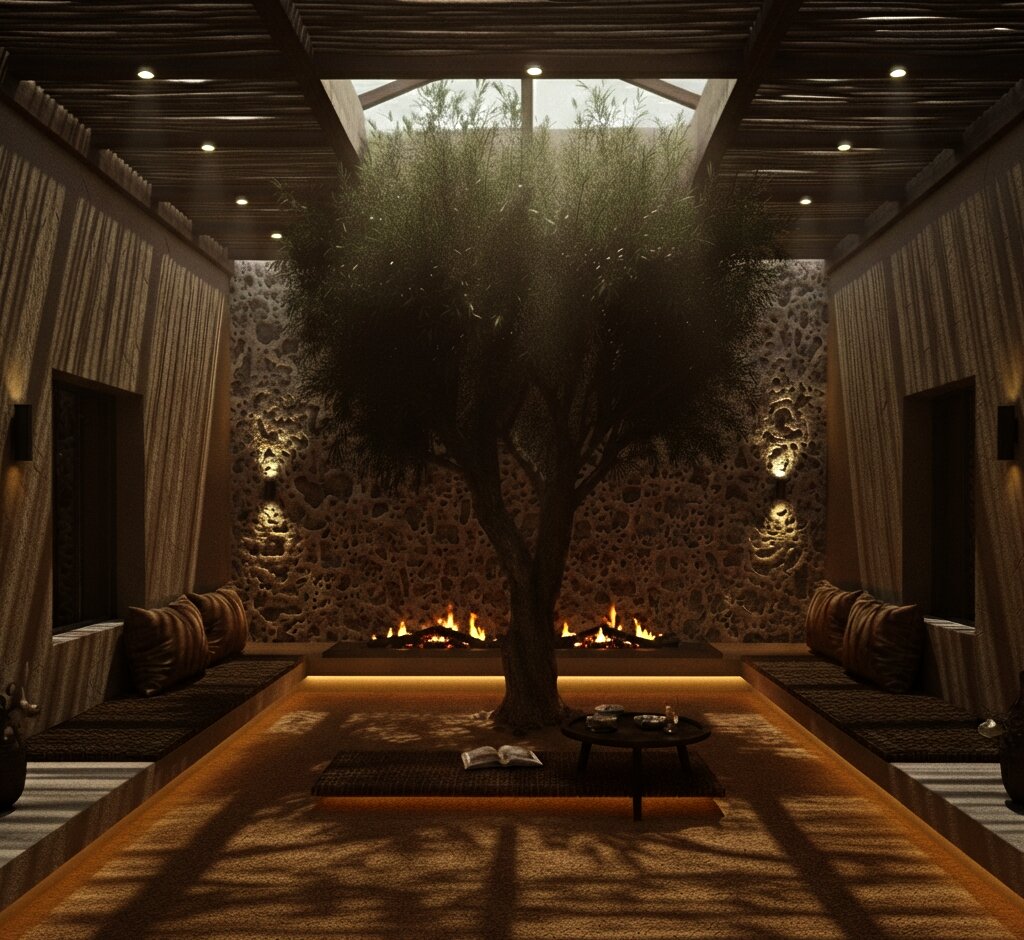
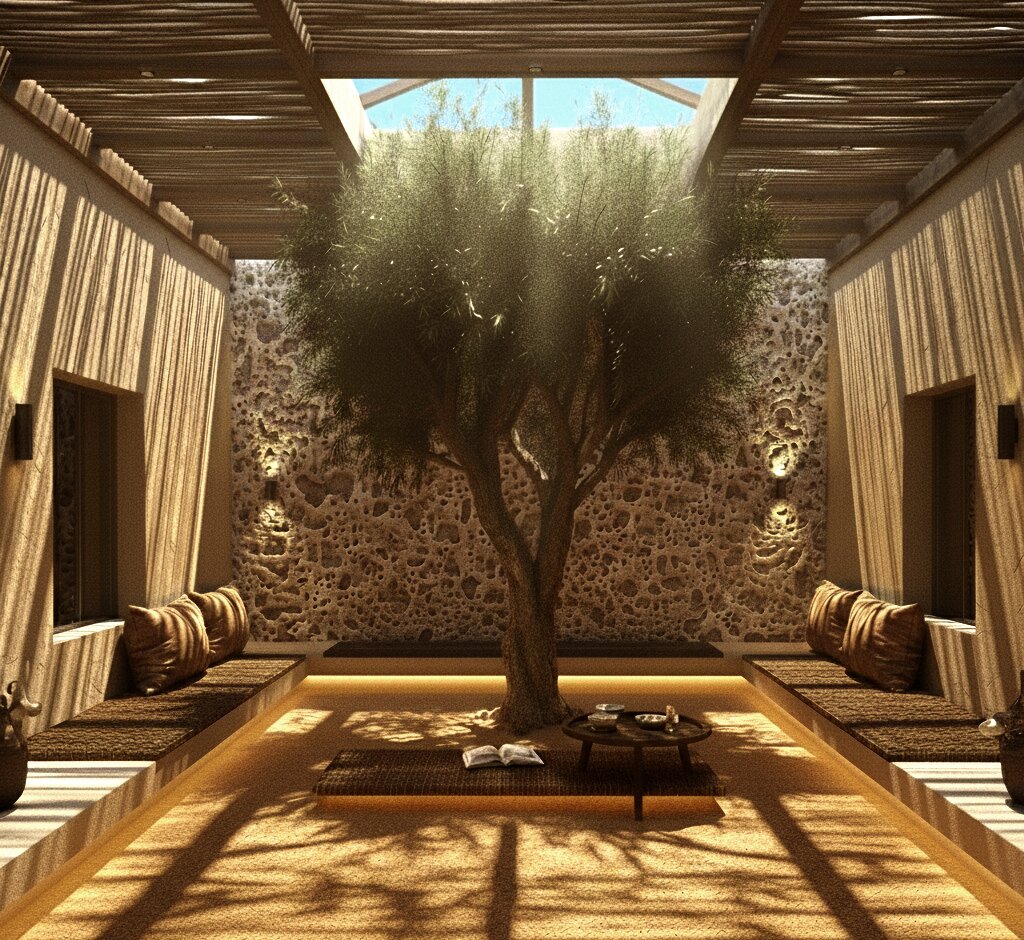
The Desert Courtyard Alcove translates this thinking into a majlis-inspired space rooted in the ecology of the UAE. A majlis is traditionally a gathering space within Emirati homes, used for hospitality, conversation, and communal reflection. It is shaped by both social rituals and architecture. In this courtyard, a mature Ghaf tree anchors the space, growing directly from the sandy floor and acting as both spatial and symbolic center. Coral-like stone walls reference vernacular Gulf architecture, grounding the space in regional material traditions. Above, a pergola filters sunlight, casting shifting shadows that echo palm groves and desert shade structures.
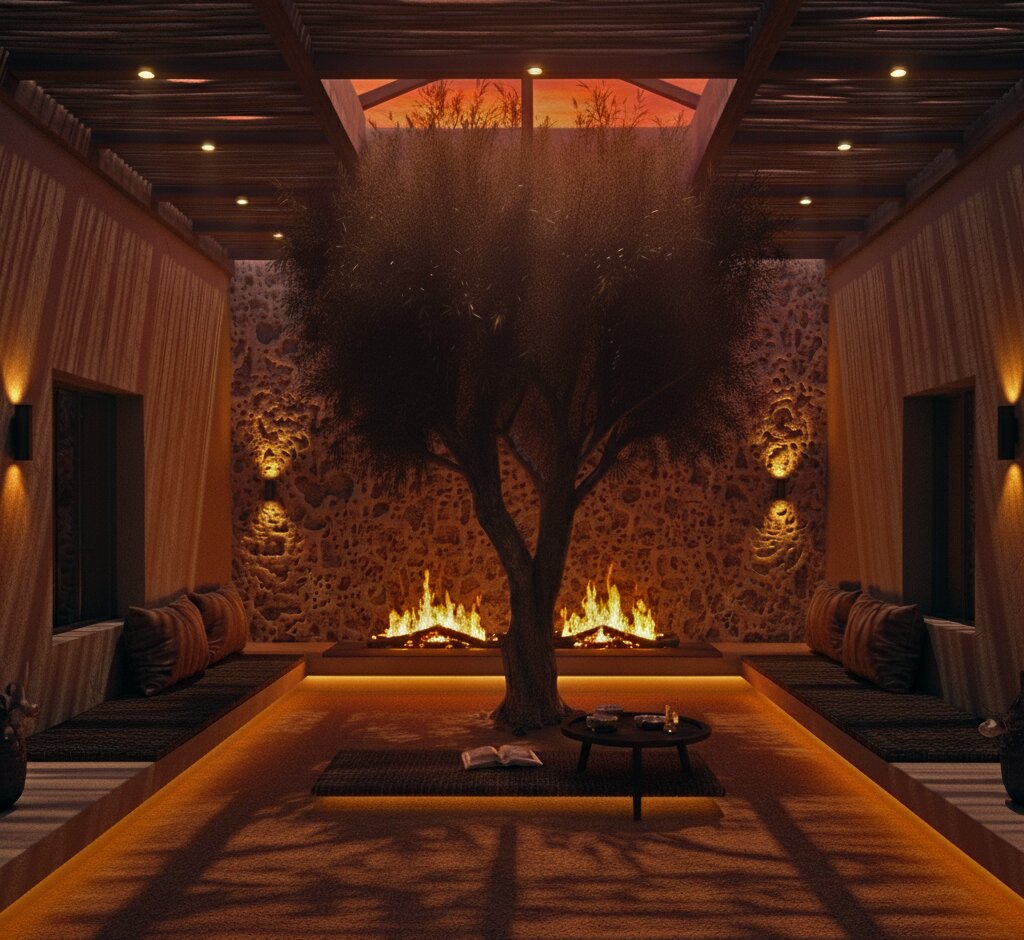
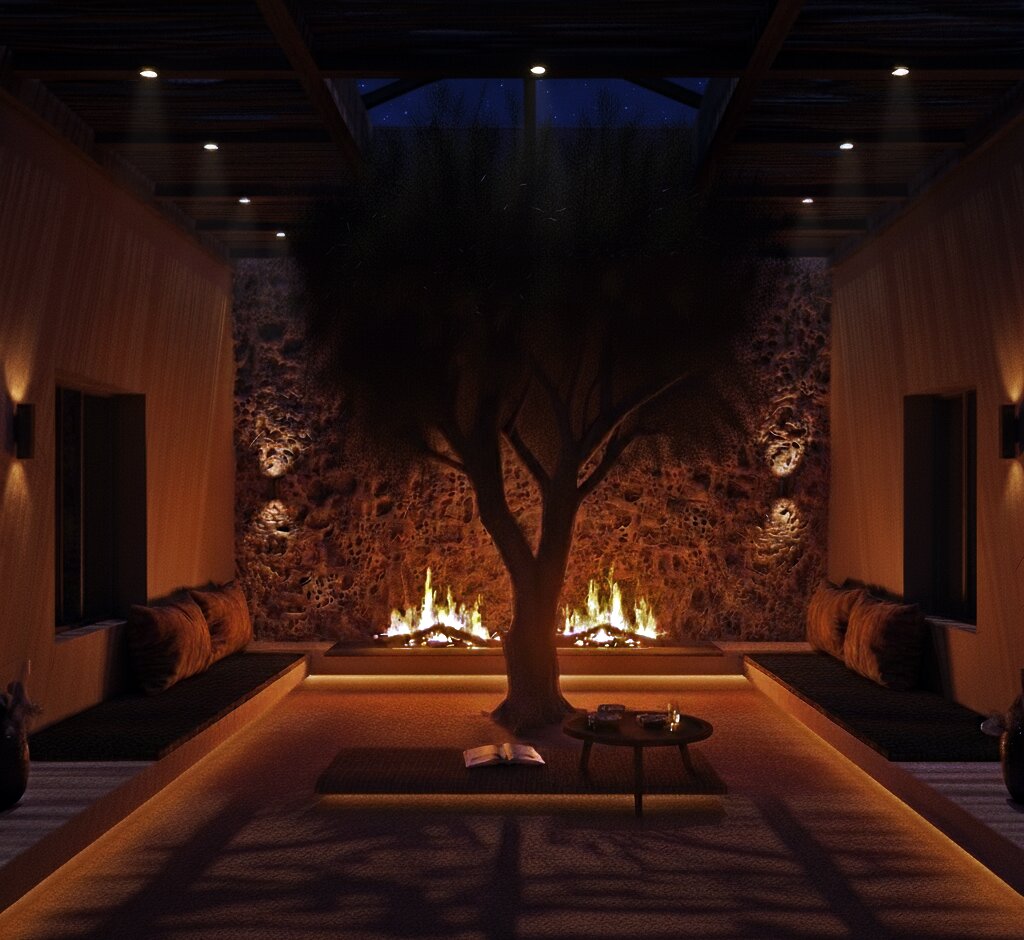
Time plays a central role in how the courtyard is experienced. Early morning light is soft and quiet, with subtle warmth from the fireplace and artificial lighting. By midday, the sun sharpens shadows and reveals the textures of sand, stone, and leaves, connecting the space directly to the desert beyond. In the evening, amber light and fire introduce intimacy, recalling desert camping traditions and shared moments of gathering. At night, under a full moon, the Ghaf tree becomes a silhouette and lighting recedes, allowing stillness to take over.
What matters most is not any single design element but the accumulation of sensory cues over time. The Ghaf tree, the coral walls, the movement of light, and the presence of fire work together to create familiarity. Attachment forms gradually, through recognition rather than spectacle.
While this courtyard is deeply rooted in the UAE, the idea of localized biophilic attachment can travel. In different places, local landscapes, materials, and traditions would take its place. The principle remains the same. Design can foster belonging by listening closely to local ecologies and cultural rhythms, allowing spaces to feel familiar and worth returning to.